






“Bioplastic” can mean almost anything. So here’s exactly what’s in our printers.
Every lamp we make starts as filament: recycled PLA and recycled PETG. Here is what each one is, where it comes from, and why the surface of your lamp feels the way it does.
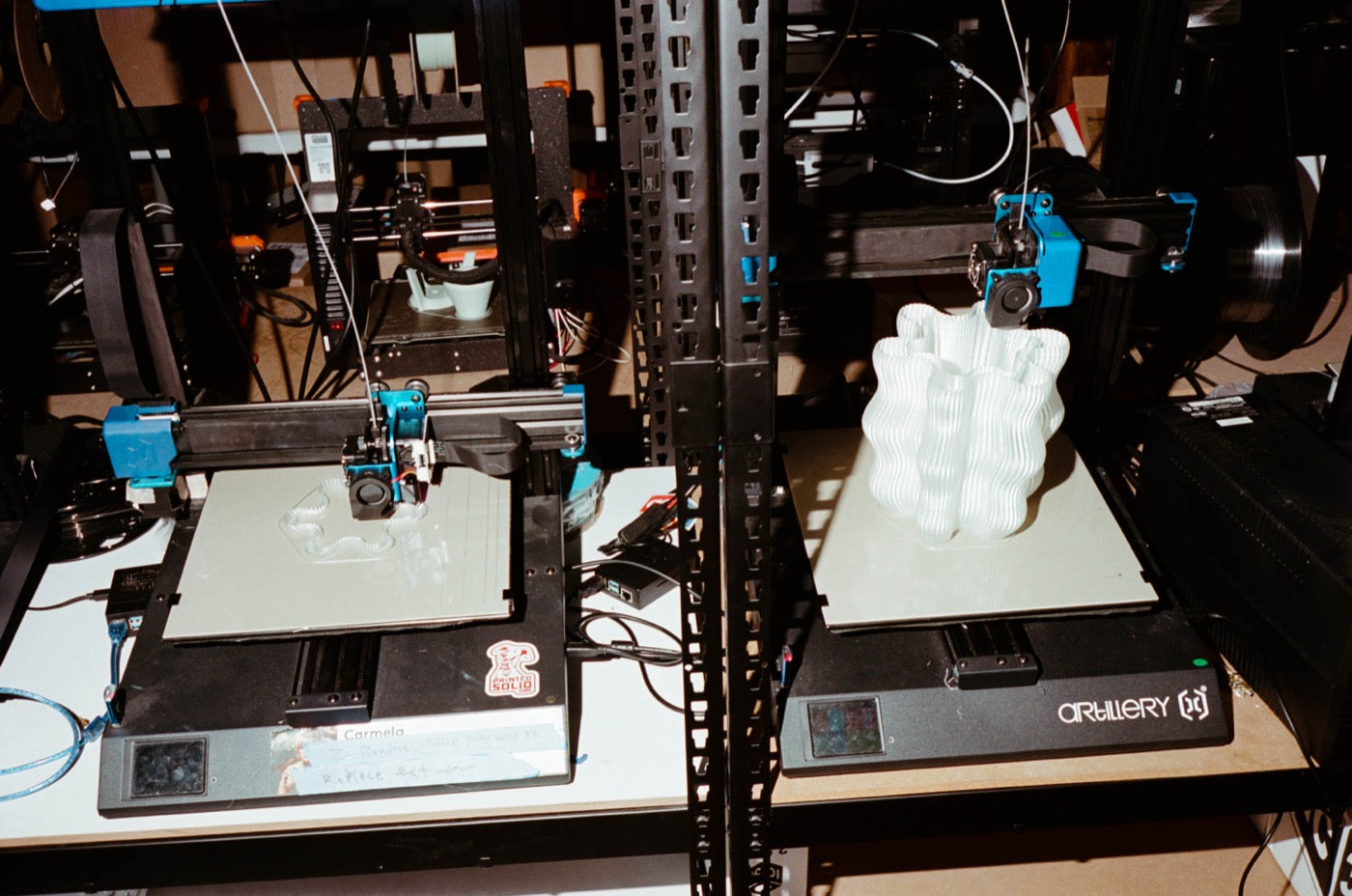
Recycled PLA
Derived from renewable sources like cornstarch, sugar cane, or cassava. Ours is corn based and already recycled, and we have some of the only domestically recycled PLA around. This is a big deal. Our opaque shades are printed in PLA.
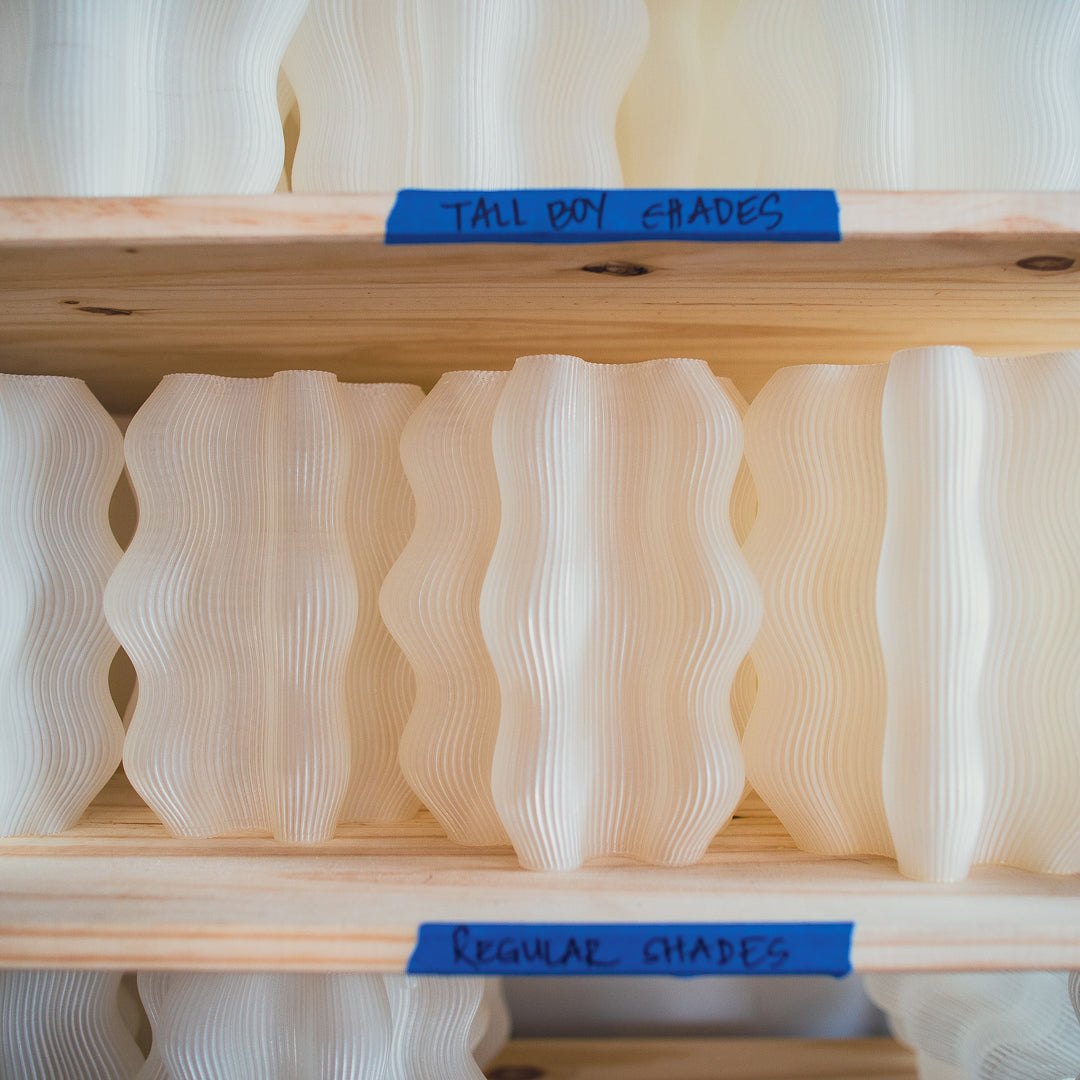
Recycled PETG
Every translucent colorway we make is PETG: emerald, amber, clear, olive, and smoke. It can be broken back down into its original form and recycled again after its life as a lamp, and the glycol in PETG, as opposed to PET, gives us more control in our prints.
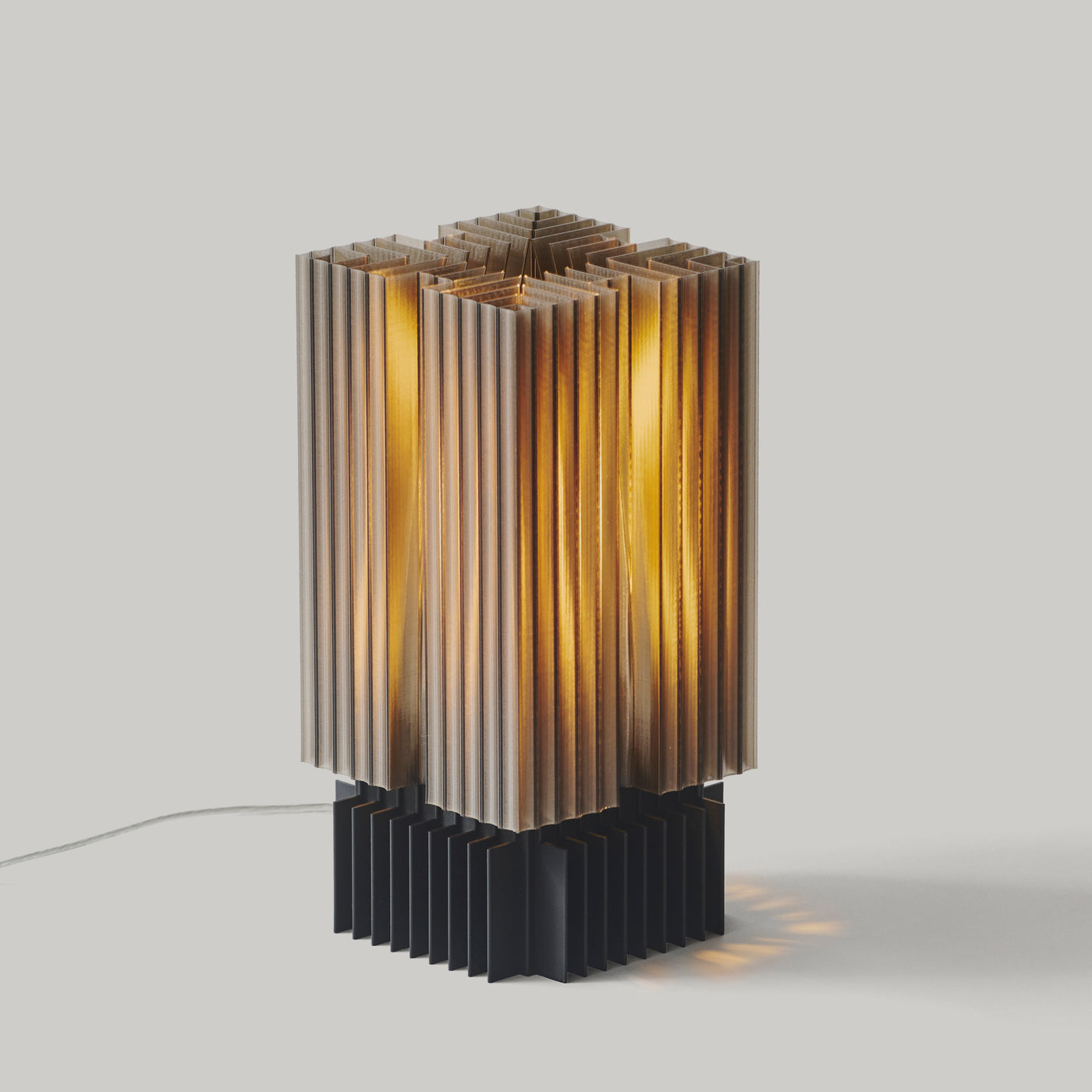
From idea to object in hours, not weeks.
3D printing is the basis for every design we make. No factories, no minimums: everything happens in our studio in Brooklyn.
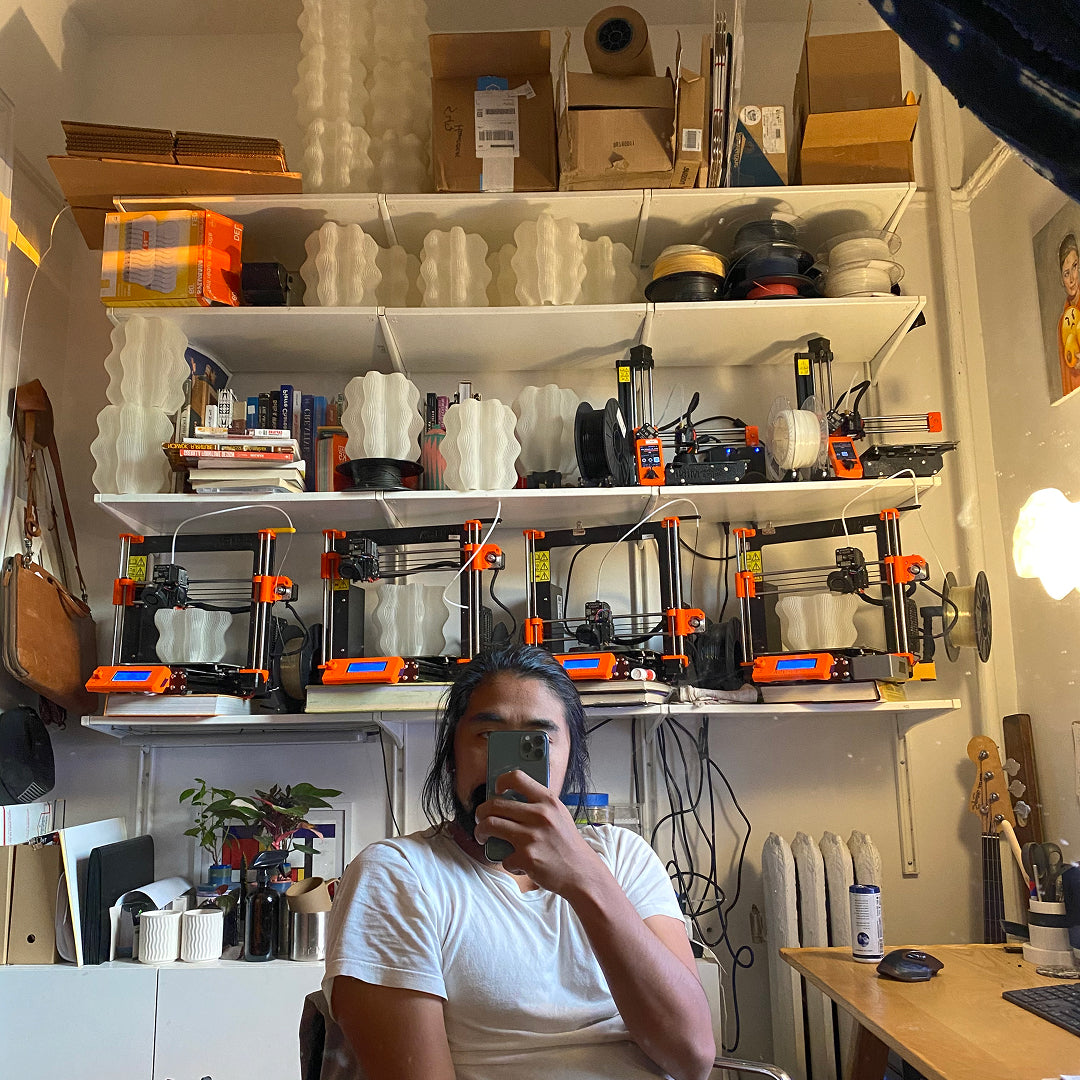
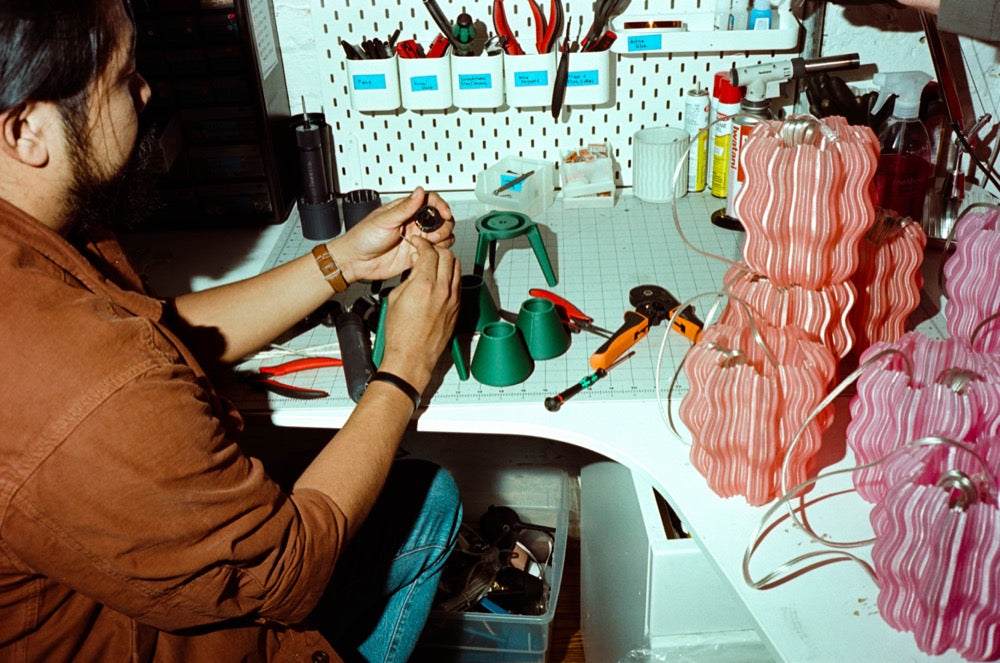
Your lamp doesn’t exist yet. The order is what starts it.
A printer on the wall picks it up and builds your shade layer by layer, in hours instead of weeks.
Hardware, wiring, and testing happen at the bench, in house.
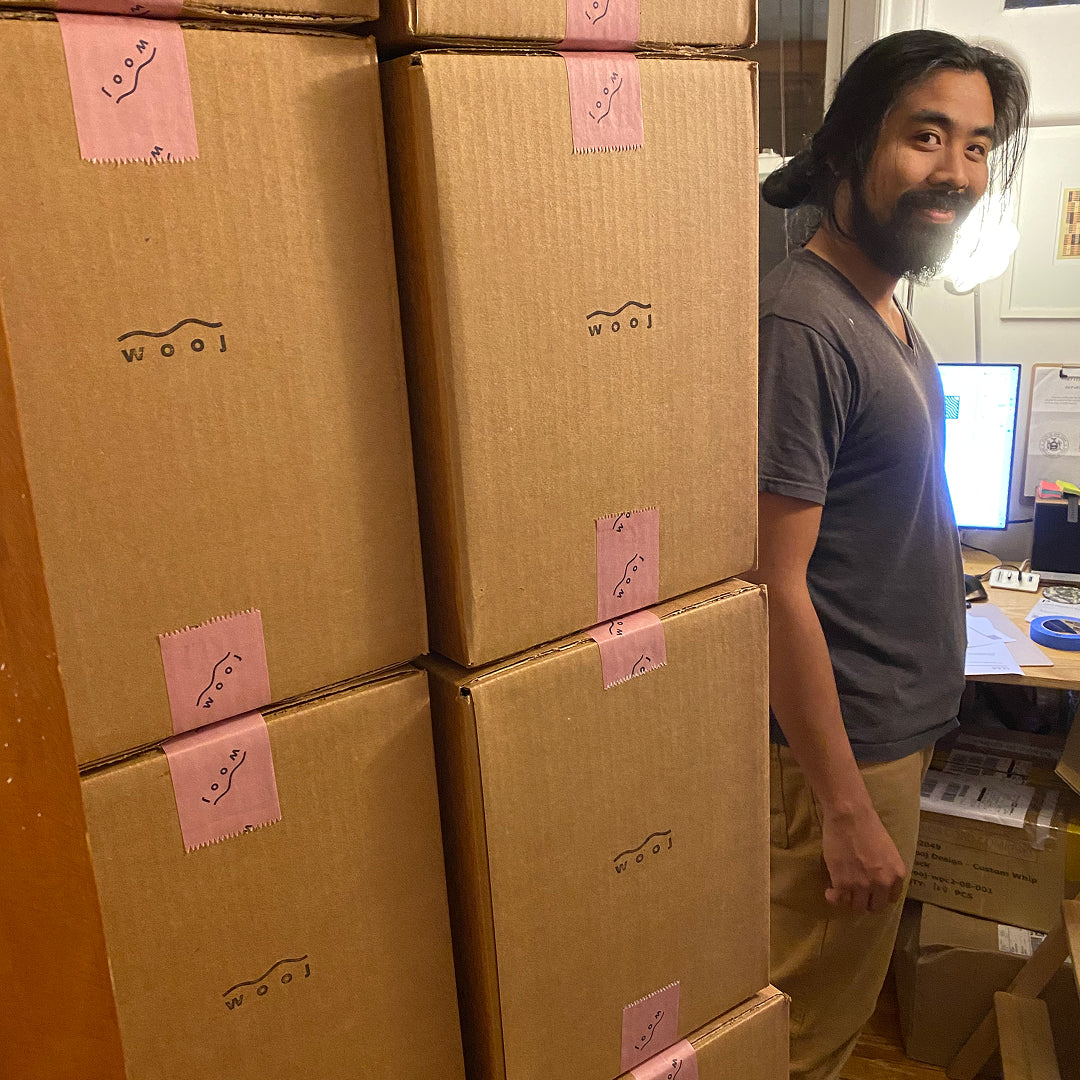
Printed, assembled, and shipped from our studio.
Picture a glue gun that you squeeze continuously (and really evenly!) around in layers.
That is FDM, the kind of 3D printing we do. It was invented in the late 80s, and when the patent expired a whole community of people developed around it. That open technology is how a small Brooklyn studio gets to make lamps at all.
The traditional way needs a mold and a mass market.
Injection molds are extremely expensive, ordered in bulk, and built for mass production, so there are a lot of expenses to recoup before a design breaks even. In our case there is no mold: we can see a design tangibly almost instantly, get it to you faster, and implement changes as your feedback comes in.
The ridges you can feel are the layers of the print. We don’t sand away the evidence.
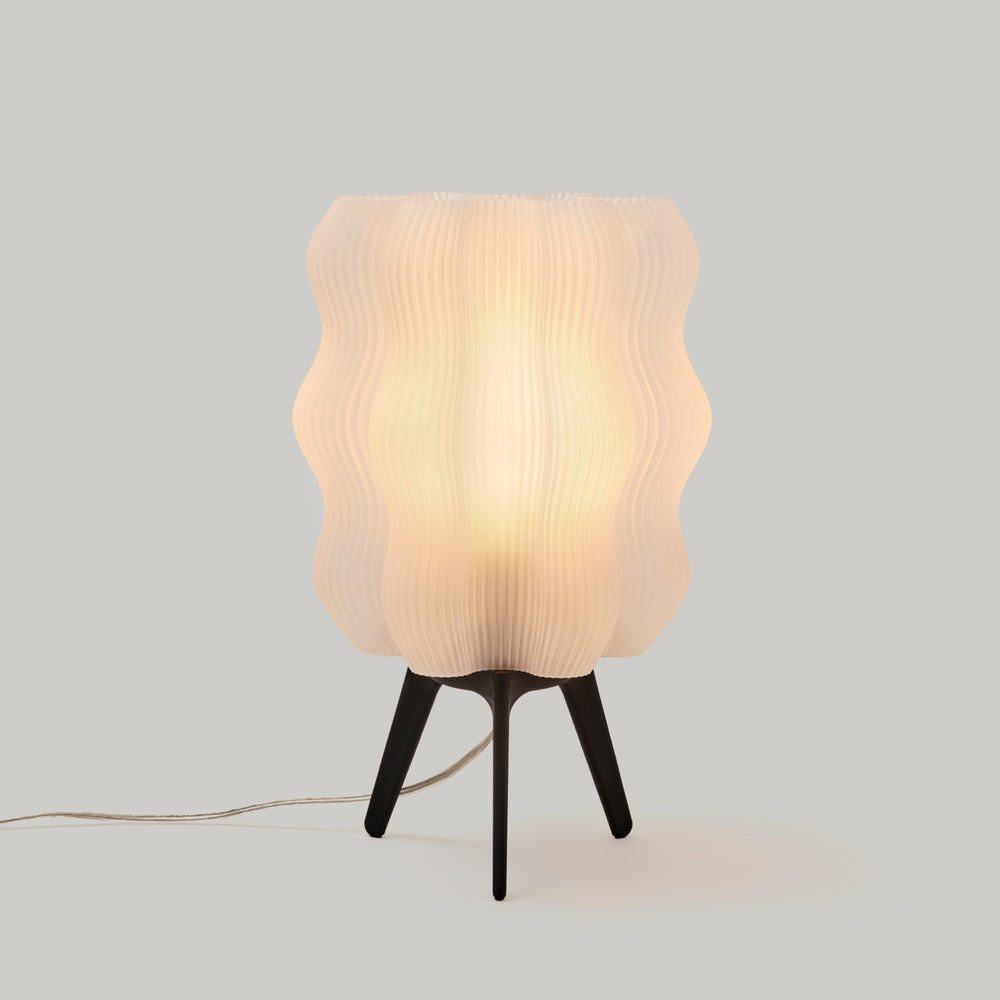
Thinner layers would mean a smoother surface, but they would take much longer to print and force a much less friendly price. The texture is part of what keeps the lamp affordable.
Our designs highlight what 3D printing can do (infinite shape options, strength, lightweight quality) rather than trying to hide the filament lines.
The bigger waves that shape our Wavy Lamp are both aesthetically pleasing and structurally advantageous: a stronger, more durable product without the extra time and material of printing additional layers.

